-
 August 21, 2025 5:00am
What should a company do if its trading partner fails due to geopolitical disruptions?
Last week, I visited Switzerland again—specifically, Bern. The architecture and the cityscape almost transport you back to the Middle Ages, if it weren’t for the modern transport infrastructure. What stands out most to me is the punctuality of buses and trains, which in Switzerland truly run like clockwork.
Geopolitically, however, Switzerland seems to have missed its renaissance. Since August 7, 2025, the United States has imposed punitive tariffs of 39 percent on Swiss exports. This hits the country with full force. By comparison, tariffs on exports to the EU amount to only 15 percent. The U.S., accounting for around 17 percent of total Swiss exports in 2024, is Switzerland’s most important trading partner. The sectors most affected are pharmaceuticals, machinery, and watches—the country’s flagship industries that define it on the global stage.
With a 39 percent surcharge, these products can hardly remain competitive in the U.S. market. While politicians and industry associations in Bern are still looking for those to blame and debating possible shifts in Washington, affected companies have no time to lose.
The central question is: what alternatives exist to compensate for the loss of such a crucial market? A logical step is to make greater use of the European single market—not only as a sales market but also as a production base—to mitigate high tariffs in the medium term.
For German companies, this means they will face additional competition from Swiss firms in the future. At the same time, Swiss investments are likely to flow into the EU or even directly into the U.S. In the short term, sales growth in Europe is the most immediate option, albeit with significantly lower margins. Building new production facilities, on the other hand, will take years.
The key lesson from this situation is that scenario analyses are not a theoretical exercise—they represent real-world resilience practice. Companies must ask themselves: what happens if the most important trading partner suddenly fails due to geopolitical disruptions, and which measures can be implemented to cushion such an event?
These measures must be divided into short-, medium-, and long-term steps, each with clear responsibilities and deadlines. A mere checklist of actions is not enough. The entire company along the value chain—from procurement to production to sales—must be involved. Interfaces must also be carefully reviewed, as overlooked dependencies often arise there.
Because resilience planning is time- and cost-intensive, management must prioritize according to the Pareto principle and focus on the few levers that generate the greatest impact. Companies that continuously monitor and analyze geopolitical developments can identify critical markets and products early, gaining a strategic advantage. Simply reading the daily news is not enough; a deeper understanding of global political and economic mechanisms is required.
The tariff dispute between the U.S. and Switzerland will also have immediate consequences for German companies, highlighting the complexity of this development. Waiting to see what others do is not an option. The homo conservans, or homo resiliens, which I have discussed before, acts here as a counter-model to the homo oeconomicus: not profit maximization at all costs, but precautionary stability and sustainable safeguarding of business fundamentals.
Perhaps Switzerland will now recognize that its self-imposed isolation was only viable as long as the geopolitical constellation allowed it. The U.S. may account for just 17 percent of Swiss exports, but the collateral damage is likely much greater. Perhaps this very pressure will lead to a stronger opening toward the European Union. As a transit country in the heart of Europe, Switzerland certainly has much to gain.
Share this article:


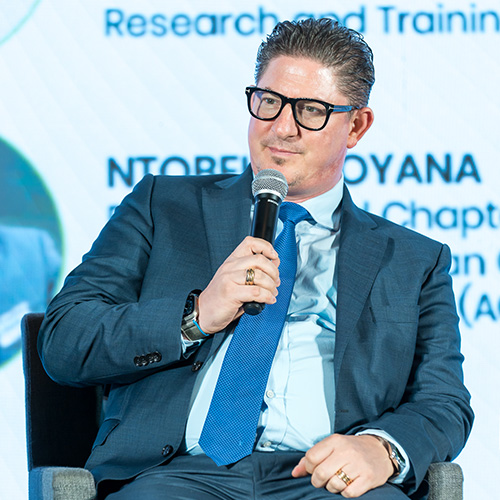
Boris van Thiel
Member of the Executive Board, LMBG GmbH
Boris van Thiel is a geographer and entrepreneur with two decades of experience living and working in the Gulf States. He currently serves as Co-Managing Director at LMBG Logistics and Management Consulting GmbH in Berlin. As the founder and driving force behind Boardroom Geopolitics, Boris explores how geography shapes global business strategy. His work delves into the connection between leadership and the geopolitical challenges that today’s executives and decision-makers must navigate. He can be reached at borisvanthiel@boardroomgeopolitics.de